Showing posts with label block. Show all posts
Showing posts with label block. Show all posts
Saturday, June 24, 2017
Popsicles Block
Popsicles Block

I had a lot of fun making this block for
Anna as a part of Ringo Pie quilting bee.
November is Annas month, and she picked Dessert
for her theme. Awesome, was the only thing I could
say. I LOVE anything sweet and have wanted to make
something sweet and delicious with my fabrics.
I had tons of ideas for dessert, but when I
saw a package of popsicles at Costco the other day,
(that looked just so yummy), my heart was set for
popsicles. For one, I really love them. For two,
I really appreciate a lot of straight lines
on a popsicle - makes it easy to paper-piece!

It is extremely satisfying to see this finished
block because I wasnt sure if this idea was feasible
at first. I started off with a rough sketch of a
single popsicle. (The chocolate one) and then
searched for some popsicles images online for
inspiration to come up with a few more
popsicles to go with. One thing I like about
this block is that there is an ice cream man
in it. Really? You cant tell? Then I need to
have you Look and See!

I love this print by Heather Ross.

Oh by the way thank you so much for all of you
who took the time to tell me about your favorite
part of the day. I really enjoyed reading each
and every one of your comment. It was really
therapeutic to learn about a precious moment in
everyones life. It seems that all of us treasure such
simple moments, like quiet time in the morning,
reading books to children, having dinner with
family, and a cup of coffee/tea. So nice.
The random number generator picked these
three winners.
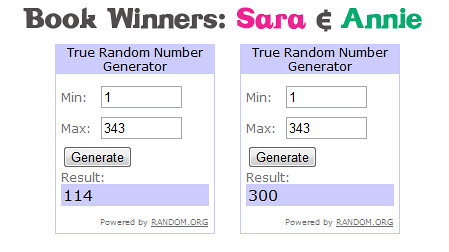
Sara who said.. "Hello, my favourite time of day
is first thing in the morning, I say good morning
to each of my children (I have 3) and they all say
good morning back with such enthusiasm. Its beautiful."
And Annie who said.. "My most favorite moment
of the day is when I first get up. No one else
is up yet and this time is mine alone!!!
I am up for either the book or the fabrics -
both look really nice."
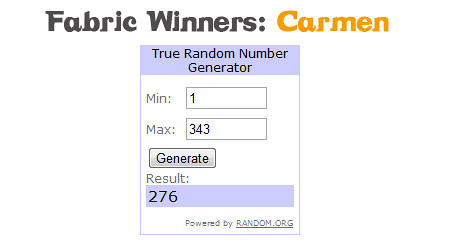
Carmen who said... "Oh Ayumi, what a sweet giveaway
- thank you! Please put me down for those beautiful
fabrics:) My favourite moment of the day is either my
morning coffee, or sitting down to eat dinner with my
family:) I think my day is pretty much book-ended by
these two events. Thanks again!"
Congratulations to three of you! I am contacting you soon..!
For those who didnt win this time, please dont be
disappointed, because I will have another giveaway for
Suzuko Kosekis new book next year too :)
Have a great rest of the day, everyone!

Available link for download

Tuesday, May 2, 2017
On Dodd Frank Major Swap Participants Swap Execution Facilities and Block Trades
On Dodd Frank Major Swap Participants Swap Execution Facilities and Block Trades
More on the derivatives title in Dodd-Frank:
Major Swap Participants (MSPs)
This will be a huge issue for hedge funds. And unfortunately, this is an area where Dodd-Frank is a total mess. For some reason, Barney Frank and Chris Dodd allowed Blanche Lincolns definition of "major swap participant" (MSP) to remain in the bill, despite the fact that it was widely panned by, well, everyone (including regulators). In any event, the bill defines MSP as anyone who is not a swap dealer and who (emphasis mine):
(i) maintains a substantial position in swaps for any of the major swap categories as determined by the Commission (excluding "positions held for hedging or mitigating commercial risk," and certian pension funds);The bolded parts represent completely undefined and highly ambiguous terms which currently have no legal meaning. (The definition of "major security-based swap participant" closely tracks this definition, but, oddly, does not include a similar exception for pension plan positions.)
(ii) whose outstanding swaps create substantial counterparty exposure that could have serious adverse effects on the financial stability of the United States banking system or financial markets; or
(iii)(I) is a financial entity that is highly leveraged relative to the amount of capital it holds and that is not subject to capital requirements established by an appropriate Federal banking agency; and
(II) maintains a substantial position in outstanding swaps in any major swap category as determined by the Commission.
Clearly, whether an entity qualifies as a MSP (or "major security-based swap participant") will have to be determined on a case-by-case basis. Does this mean that all hedge funds will have to periodically provide the CFTC and SEC with their balance sheets? I assume it does — how else would the CFTC and SEC know whether a certain hedge fund should be designated a MSP? In fact, I think hedge funds will have to provide the CFTC and SEC with more than just their balance sheets. A simple balance sheet wont be enough to determine whether a hedge funds outstanding swaps create "substantial counterparty exposure that could have serious adverse effects" on financial stability. So presumably, hedge funds will also have to provide the CFTC and SEC with information on their outstanding swaps positions, including the identity of their counterparties. These concerns were raised prior to the conference committee in a widely-circulated memo from one of the big law firms (I cant remember which firm), but for some reason, lawmakers chose to leave these issues unaddressed.
The main reason the definition of MSP is so important for hedge funds is that nonbank MSPs will be subject to capital requirements (set by the CFTC or SEC). Significantly, the capital requirements wont be limited to the swaps activity that qualifies the entity as a MSP. In setting the capital requirements for MSPs, the CFTC and SEC are required to take into account "the risks associated with other types of swaps . . . engaged in and the other activities conducted by that person that are not otherwise subject to regulation." So once a hedge fund is designated a MSP for any type of swap, the CFTC and SEC will have broad authority to set capital requirements based on the hedge funds entire operation.
Personally, I dont have a problem with more regulation of hedge funds, or even minimum capital requirements for hedge funds. This is certainly not the ideal way to accomplish that, especially since it applies only to hedge funds that are major players in swaps (as opposed to HFs that are major players in bonds, futures, options, or even equities). But on net, in spite of the epically bad drafting, this could end up being a net positive for the financial system. Hedge funds, as well as the Blackrocks and PIMCOs of the world, will obviously scream bloody murder. Thats to be expected. At the end of the day, Dodd-Franks impact on MSPs will depend, of course, on what the CFTC and SEC do with their authority.
Swap Execution Facilities (SEFs)
This will be one of the most interesting aspects of the derivatives title. Contrary to popular belief, Dodd-Frank does not mandate exchange-trading for standardized/cleared swaps. It requires cleared swaps to trade on either an exchange or a "swap execution facility" (SEF). What is an SEF? Section 721(50) provides the definition:
(50) SWAP EXECUTION FACILITY.—The term ‘swap execution facility’ means a facility trading system or platform in which multiple participants have the ability to execute or trade swaps by accepting bids and offers made by other participants that are open to multiple participants in the facility or system, through any means of interstate commerce, including any trading facility, that—[Note: the reference to "security-based swaps" rather than "swaps" in subsection (A) is a mistake, and Barney Franks aides have said that it will be fixed in a technical corrections bill.]
(A) facilitates the execution of security-based swaps between persons; and
(B) is not a designated contract market.
This appears to be a pretty broad definition, which is a good thing. Crucially, pre-trade price transparency is not required — again, this is a good thing. Im not surprised that pre-trade price transparency isnt required — Gensler wasnt naïve enough to buy the "pre-trade price transparency is always and everywhere a good thing!" argument, and pushed lawmakers not include such a requirement.
Most crossing shops, including most so-called "dark pools," appear to qualify as SEFs. Theres technically a question as to whether so-called "single-dealer systems" will qualify as SEFs. Banks in-house counsel are already pushing an interpretation in which single-dealer systems would qualify as SEFs, but frankly, its a pretty specious argument, and its very unlikely to pass muster with the CFTC. (It has to do with what the phrase "that are open to multiple participants in the facility" applies to.) Itll be interesting to see if "negotiated dark pools" like Liquidnet qualify; I think they should, given the definition in the bill.
There are two situations in which cleared swaps wont be required to trade on an exchange or SEF. First, when no exchange or SEF lists the swap (see § 723(h)(8)(B)). Second, essentially if the CFTC or SEC says that the swap doesnt have to trade on an SEF. Specifically, § 733(d) authorizes (but does not require) the CFTC and SEC to promulgate rules "defining the universe of swaps that can be executed on a swap execution facility." If a particular swap is not included in the universe of swaps that can be executed on an SEF, then it can be executed however the parties wish — even if an exchange lists the swap. Its safe to assume that the CFTC and SEC will both elect to promulgate rules defining the universe of swaps that can be traded on an SEF. When they do, this will be an important flashpoint to watch.
"Large Notional Swap Transactions" (i.e., Block Trades)
In general, Dodd-Frank subjects all cleared swaps to "real-time public reporting" of "transaction and pricing data" (excluding the identity of the counterparties). However, § 727(E) requires the CFTC to promulgate rules: (a) specifying criteria for determining what constitutes a block trade, and (b) providing for a time delay for public reporting of block trades. These rules will be crucial. Trading in the swaps markets tends to be in size (although its been a few years since I was in-house at a dealer, so this may have changed), so its entirely possible, if not likely, that a significant percentage of swaps trades will be considered "block trades," and thus subject to the delayed reporting requirement. In that case, the length of the time delay for public reporting of block trades will be extremely important. Expect heavy lobbying from both the dealer banks and hedge funds on this issue.
Available link for download
Monday, March 27, 2017

Subscribe to:
Posts (Atom)